Eco-design resource centre
Welcome to Valobat’s Eco-design resource centre, a toolbox to help support manufacturers, distributors, and importers with their eco-design initiatives.
Eco-design: what are we talking about?
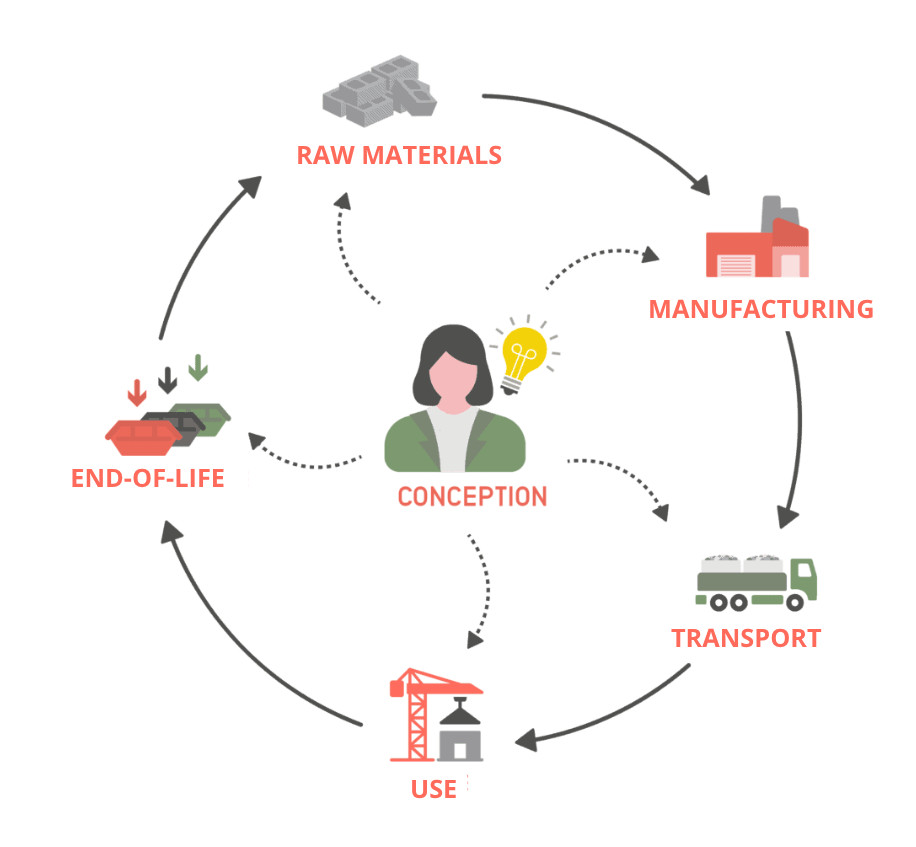
Eco-design involves integrating environmental protection from the very outset of creating goods or services. Its primary objective is to reduce the environmental impact of products throughout their entire life cycle: from raw material extraction, production, and distribution, to use and end-of-life.
Eco-design is characterized by a holistic view of these environmental impacts. It adopts a multi-stage approach (considering the various phases of the life cycle) and a multi-criteria approach (taking into account material and energy consumption, emissions into the natural environment, and effects on climate and biodiversity).
Eco-design: a business opportunity
Eco-design is a source of innovation and differentiation for manufacturers, distributors, and importers. It adds value, boosts efficiency and competitiveness and limits their ecological footprint. Below you will find articles that highlight the advantages of eco-design, such as:
Getting ahead of upcoming regulations
Entering into new markets
Cost optimization and increased actual margin
Increased sales volume
Improved brand image
Better customer relations
Developing meaningful projects to boost employee motivation and attract young talent
Increased innovativeness
How to start a project step-by-step
Do you want to begin an eco-design project? Below you will find the appropriate resources to help you find the right process for your company.
How it might look
Detailed steps
This is done in several stages:
- Analysis of the overall context of the company: its organisational maturity and the resources available to implement an eco-design project.
- Formation of a multidisciplinary project team (the project team can include all company roles but must imperatively include management)
- Identification of the system and/or product to be studied
For further learning
Project team awareness tool
The environmental assessment of the baseline situation is like an environmental snapshot of the product in which one evaluates the environmental impact of the product using qualitative or quantitative tools to identify the most impactful stages, thus framing the project’s next steps.
For further learning
This step requires stimulating your creativity to foster innovation. The entire project team proposes as many ideas for product improvement as they can imagine. At this stage, you may push the limits of your imagination without considering business constraints.
For further learning
youro make a decision, you must first prioritise your list of ideas, using detailed and rigorous arguments. This requires compromise and the integration of all business constraints into the equation.
It is now time to re-evaluate the environmental impact of the “eco-designed” product. This assessment allows you to compare your final product with your initial product to check and see if the changes in design actually make the final product more environmentally-friendly than the initial product.
Communication is the last stage in the eco-design process. Once you have reached your goal and your product is ready to be marketed, you must highlight how and why your product was designed with the environment in mind.
Note: this step is an essential part of adding value to your business and the product and must be carefully executed in order to avoid claims of greenwashing.
Just like the eco-design process, the 4 types of environmental communication are standardized:
- Ecolabel (ISO 14024)
- Environmental declarations (ISO 14020)
- EPD (ISO 14025) or eco-profiles (FDES and PEP ecopassport ISO 15804)
- Self-declaration (ISO 14021)
To learn more:
The Eco-design hub’s notice on environmental communication and self-declaration
Sustainable and responsible purchasing
Prioritize products from fair trade sectors, made with sustainable materials, and that respect workers’ rights. By opting for committed brands and transparent production circuits, we have the power to support a fairer and more ethical economy.
Responsible purchasing rests upon 3 main pillars:
- The environment (carbon footprint reduction, circularity);
- Society (respect for human rights, consumer protection);
- The economy (fair trade, value for money).
What are the advantages of sustainable purchasing?
Meeting stakeholder’s expectations
Reducing operational and reputational risks
Long-term savings
Being a part of the ecological and social transition
Meeting regulatory obligations
Strengthening competitiveness
Locate structures that can help
Our eco-design experts have compiled a list of stakeholders specialized in eco-design available to support you and help with decision-making.
Legend
Technical centre
Resource centre and relay centre
Training centre
Public body
Competitiveness cluster
Consulting and research firm
Technical centre
Resource centre and relay centre
Training centre
Public body
Consulting and research firm
Funding for your eco-design projects
Public aid
ADEME and BPIfrance actively support eco-design projects with various forms of financial aid, allowing companies to innovate while reducing their ecological impact.
Coming soon:
Funding from Valobat
This space will give you access to future Valobat calls for projects regarding eco-design.
Regulatory requirements
Prevention and Eco-design Plan
Under the Anti-Waste for a Circular Economy (AGEC) law, producers subject to Extended Producer Responsibility (ERP) must develop a prevention and eco-design plan (PPE).
Valobat provides numerous tools and documents to help its members comply and turn this requirement into a genuine business opportunity.
If you have not yet developed your prevention and eco-design plan, go to the link below:
Information on the recyclability of your products and materials
The AGEC law requires producers to fill our specific forms on the environmental qualities and characteristics of their products, namely recyclability.
To help with this regulatory obligation, Valobat provides a simple and effective tool to determine the recyclability of your products and materials falling under the Building and Furnishing EPR schemes, and to generate the information you need to display in order to fully comply. The tool is available in the Eco-design section of your MyValobat Member area.
Tailored eco-design support
We are here to help all Valobat members with their eco-design initiatives. All companies can benefit from our support, regardless of what stage you are at, the size and activity of your company, or how experienced you are with eco-design.
Speak directly with a Valobat eco-design expert, who will recommend tools and services tailored to your needs. After an interview with one of our experts, they will suggest a detailed plan to meet your objectives and will be available for support throughout the process.
Want to start the process?
- Go to MyValobat Member
- In the lefthand menu, click on the “Eco-design” section, then on “Eco-design support”
- Then click on “Access the platform” and complete the form to make an appointment with our experts
Stay connected so you don’t miss any news from the construction industry or updates on our services!
Sign up for the newsletter