REP des emballages professionnels : les adhésions sont ouvertes – Rejoignez le partenariat 100% Bâtiment Valobat / Twiice

Eco-design and reuse

    Develop environmentally-friendly product ranges

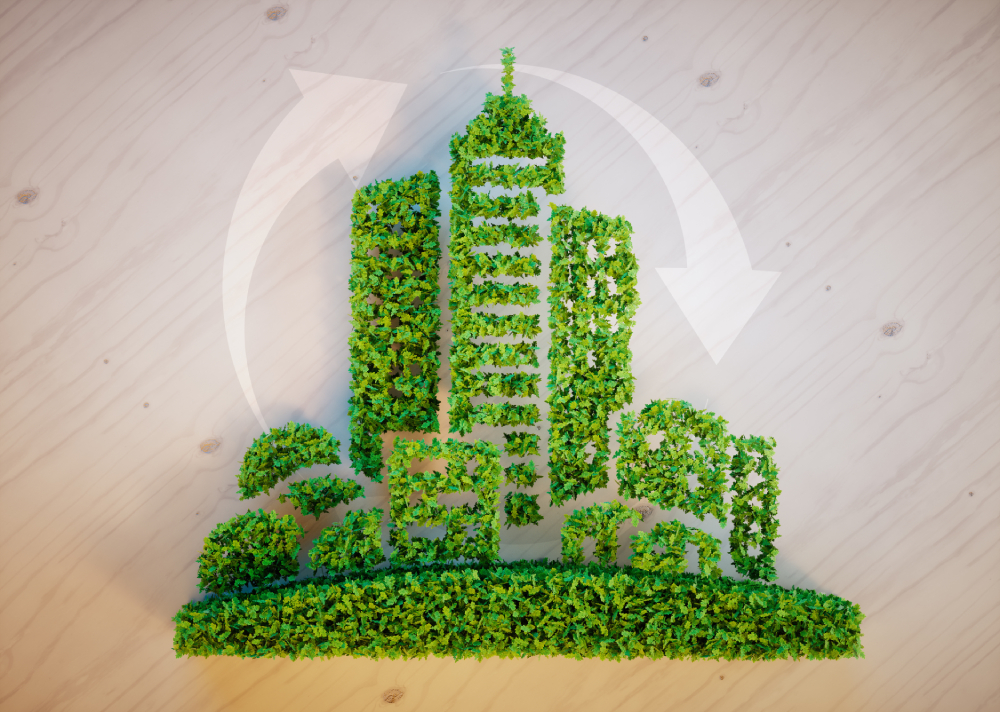
    Modèle de bâtiment vert en végétation pour la durabilité environnementale.

    Eco-design involves thinking environmentally as early as the design phase of a product or service in order to reduce the environmental impact of a product throughout its life cycle, from production to end-of-life, including its use, distribution, etc. This can mean selecting sustainable materials, improving product recyclability or limiting the use of raw materials during the manufacturing process.

    Valobat offers a tailored support program to its members to help promote eco-design within their organisations.

    Our services are accessible to all companies, regardless of how established they are, their size, sector of activity, or level of maturity regarding eco-design.

    Integrating reuse and repurposing into your business

    Through eco-design, manufacturers can work on the reuse potential of materials to anticipate their second life.
    They can also develop product ranges derived from reuse to meet the growing demand from their clients.

    Valobat provides support through various means:

    • Financial support
    • Networking with reuse stakeholders
    • Eco-design and reuse events

    Are you developing or looking to offer reused product ranges?
    Contact our dedicated team:

    Reduce the cost of your eco-contributions

    Valobat implements a progressive system of bonuses and penalties applicable to the amount of its members’ eco-contributions, which we refer to as an eco-modulation. Eco-modulation rewards products and materials based on criteria related to their environmental performance.

    Define the recyclability of your products

    Entrepôt de matériaux recyclés avec employés et chariot élévateur.

    The AGEC law requires producers to display environmental characteristics, such as recyclability, for certain products subject to Extended Producer Responsibility (EPR).

    This obligation specifically concerns products subject to the Building and the Furnishing EPR schemes.

    The objective is to raise consumer awareness regarding the environmental impact of their purchases. To assist you in evaluating the recyclability of your products, discover the recyclability tools implemented by Valobat for the Furnishing and Building EPR schemes.

    Develop a Prevention and Eco-design Plan

    Under the antoi-waste and circularity law (AGEC), companies placing products on the market that are subject to Extended Producer Responsibility (EPR) must develop a prevention and eco-design plan (PEP). Valobat helps its members achieve compliance by providing numerous tools and documents designed to turn this requirement into a genuine opportunity for their business.

    Stay connected so you don’t miss any news from the construction industry or updates on our services!

    Sign up for the newsletter

    Contact us Need help ?
    current=en default=fr