REP des emballages professionnels : les adhésions sont ouvertes – Rejoignez le partenariat 100% Bâtiment Valobat / Twiice

The requirement to display sorting information

Valobat helps you be a part of making a more sustainable future through support with compliance, reuse, and construction waste sorting.

Who is required to display the TRIMAN marking?

The February 2020 anti-waste and circularity law (AGEC), extended the requirement to display sorting information (TRIMAN) to items and products covered by new recycling streams.

The requirement now applies to the Building EPR scheme, in addition to the ones for Furniture and DIY & Gardening.

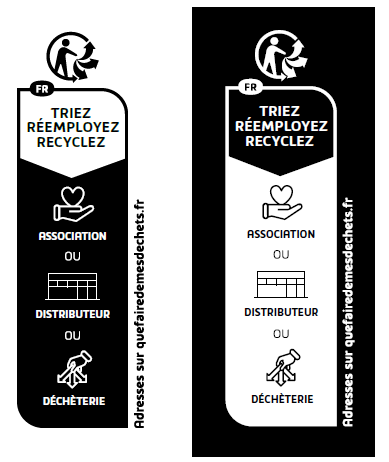
All producers, distributors, and importers of building products and materials must display sorting information, also known as TRIMAN, on their products to inform consumers, whether individuals or businesses, how to properly dispose of the product.

When will you need to integrate the TRIMAN marking on your products?

The Building EPR scheme

The TRIMAN display requirement was enacted on September 28, 2023, once the authorities had approved the markings. From this date, companies producing construction products and materials had 12 months to comply with the requirement. It is no longer legal to produce concerned goods without the TRIMAN markings.

The DIY and Gardening EPR scheme

Since December 6, 2022, distributors of DIY and gardening items (natural or legal persons) subject to Extended Producer Responsibility are also subject to the take-back obligation, for physical sales or distance sales. Products had to be brought into compliance before December 6, 2023.

The Furniture EPR scheme

This requirement has existed since December 15, 2021 for furniture components and to textile decorative items since August 25, 2023. Products had to be brought into compliance before December 15, 2022 for furniture components and since August 25, 2024 for textile and decorative items.

Find out more about the specifics of the display requirement for the EPR schemes that concern you:

Building Products and Materials

DIY and Gardening Items

Furniture Components

The sorting information display requirement for the Building EPR scheme

If you produce of building products and materials, TRIMAN concerns you. Find out more about how to comply.

DIY and Gardening Items

Furniture Components

Discover the Building EPR scheme sorting information user guide

To learn everything about the regulations governing sorting information and its rules of use, download the user guide provided by the Building Coordinating Body (OCAB).

Digital signage

In addition placing the TRIMAN marking on products, packaging, or accompanying documents, producers must provide also make this information available online for accessibility and improved understanding. (see article L.541-9-3 of the Environmental Code)

You can create your own explanations for digital signage, or draw inspiration from the document provided by Valobat and downloadable by clicking the button below.

Since when has displaying the TRIMAN marking on your products been required?

The Building EPR scheme

L’obligation d’afficher la signalétique TRIMAN est entrée en vigueur le 28 septembre 2023 au moment de la validation du marquage par les pouvoirs publics. Dès lors, les entreprises productrices de produits et matériaux de construction ont 12 mois pour se mettre en conformité sur l’affichage de l’info-tri. Passé ce délai, elles ne pourront plus produire de marchandises concernées sans la signalétique TRIMAN. En revanche, les produits fabriqués ou importés antérieurement à la date de validation du TRIMAN peuvent être écoulés jusqu’à 18 mois après la date de validation.

Which categories of Building products fall under the requirement?

Building: Category 1

Inert products and materials consisting mainly of minerals:

Concrete and mortar or their constituent components
(aggregate, sand, cement, admixture, etc.); Lime; Stone such as limestone, granite,
sandstone, and lava; Terracotta or raw earth; Slate; Bituminous mixture or
components contributing to the preparation of bituminous mixtures, excluding
bituminous membranes; Aggregate; Ceramics; Products and materials
of mineral origin not listed in another family of
this category.

Building: Category 2

Non-inert products and materials divided into nine families:

Metals; Wood; Mortars, coatings, paints, varnishes, resin (decorative products); Joinery, glazed partitions, and related products; Plaster and related products; Plastics; Bitumen; Mineral wools; Products of animal, vegetable, or other materials not listed in another family of this category.

Does the display requirement cover my building product?

Use Valobat’s TRIMAN diagnostic to see marking is required on your product and if so, who is responsible for displaying it.

Where should it be displayed?

This signage – the TRIMAN logo and product-specific sorting and disposal information – must be displayed on one of the following places:

  • the product
  • its packaging
  • documentation supplied with the product

You can also provide the Information on your website, but this does not replace the display requirement on one of the three elements listed above.

If different components of the product are subject to different sorting methods, component-specific information must be provided.

Balise Triman, consignes de tri et recyclage obligatoires.

Frequently Asked Questions

Find the answers to all your questions in our TRIMAN FAQ.

Where should it be affixed?

The requirement applies to all products intended for consumers and subject to the Building, Furniture, and DIY and Gardening EPR schemes. A consumer is a natural person acting outside their commercial, industrial, craft, or liberal activity within the meaning of the consumer code.
A product is considered to be potentially for household use if it can be installed in a household by a member of household itself or by a professional. The product therefore does not need to be purchased or implemented by the household to be considered as such.

I am a manufacturer-installer, am I concerned?

If your products may be intended for household use (purchased or installed in a home by a professional), then TRIMAN markings are required, no matter the number of middle-men. ,

I receive products in packages, which I sell individually without packaging. What should I do?

Products sold individually must include the TRIMAN markings, at least on the documents provided to the consumer.

Back to top

The DIY and Gardening sorting information display requirement

If you produce of DIY and Gardening Items, sorting information (TRIMAN) requirement applies to you. Discover how to comply.

Building Products and Materials

Furniture Components

Discover the DIY and Gardening sorting information user’s guide

DIY and Garden Items (ABJ) EPR schemes.The display also concerns the


Download our user’s guide to ensure compliance.

DIY and Gardening Digital Signage

n addition placing the TRIMAN marking on products, packaging, or accompanying documents, (see article L.541-9-3 of the Environmental Code)

When will you need to integrate the TRIMAN marking on your products?

The DIY and Gardening EPR scheme

Since December 6, 2022, distributors of DIY and garden items (natural or legal persons) subject to Extended Producer Responsibility are also subject to the take-back obligation, for physical sales or distance sales. Products had to be brought into compliance before December 6, 2023.

Is my DIY and Garden Item concerned by the sorting information display?

Valobat offers a diagnostic tool to help you verify if your product is subject to the sorting information display obligation and to identify who must affix it.

Where should it be affixed?

This signage consists of the TRIMAN logo and information specifying the sorting or disposal methods for the waste product and must be indicated as close as possible to the product:

  • on the product
  • or on the product packaging
  • or in other documents supplied with the product

Information on the website remains possible, but does not replace the mention on one of the three elements listed above.

If several elements of the product are subject to different sorting methods, these methods are detailed by element.

Balise Triman, consignes de tri et recyclage obligatoires.

Frequently Asked Questions

Pour en savoir plus, retrouvez les réponses à toutes vos questions dans la Foire aux Questions dédiées à l’affichage de l’info-tri (TRIMAN).

Which products are concerned?

The requirement applies to all products intended for consumers and subject to the Building, Furniture, and DIY and Gardening EPR schemes. A consumer is a natural person acting outside their commercial, industrial, craft, or liberal activity within the meaning of the consumer code.
A product is considered to be potentially for household use if it can be installed in a household by a member of household itself or by a professional. The product therefore does not need to be purchased or implemented by the household to be considered as such.

The product is manufactured abroad and imported into France.
Doit-on appliquer le marquage TRIMAN ?

Yes, the sorting signage must be applied. It is the producer (mettreur sur le marché) as defined by the regulations who must do so.
The producer and the supplier can, by mutual agreement, decide that the supplier will apply the sorting signage.

Are second-hand products concerned?

No, only new products are concerned.

Back to top

The DEA sorting information display obligation

If you are a producer of Waste from Furniture Elements, then you are concerned by the display of sorting information (TRIMAN). Discover how to comply.

Building Products and Materials

DIY and Gardening Items

Discover the DEA sorting information user guide

L’obligation d’affichage de l’info-tri concerne également les REP Déchets d’Eléments d’Ameublement (DEA).
Find our dedicated user guide and download the signage to ensure compliance.

DEA Digital Signage

producers must provide also make this information available online for accessibility and improved understanding (see article L.541-9-3 of the Environmental Code)

You can create a document including this digital signage as you wish, or use or draw inspiration from the document provided
by Valobat and downloadable by clicking the button below.

When will you need to integrate the TRIMAN marking on your products?

The Furniture EPR scheme

This obligation has existed since December 15, 2021 for furniture elements and also applies to textile decorative elements since August 25, 2023. Products had to be brought into compliance before December 15, 2022 for furniture elements. And also had to be brought into compliance since August 25, 2024 for textile decorative elements.

Is my Waste from Furniture Elements concerned by the sorting information display?

Valobat offers a diagnostic tool to help you verify if your product is subject to the sorting information display obligation and to identify who must affix it.

Where should it be affixed?

This signage consists of the TRIMAN logo and information specifying the sorting or disposal methods for the waste product and must be indicated as close as possible to the product:

  • on the product
  • or on the product packaging
  • or in other documents supplied with the product

Information on the website remains possible, but does not replace the mention on one of the three elements listed above.

If several elements of the product are subject to different sorting methods, these methods are detailed by element.

Balise Triman, consignes de tri et recyclage obligatoires.

Frequently Asked Questions

Find the answers to all your questions in our TRIMAN FAQ.

Which products are concerned?

The requirement applies to all products intended for consumers and subject to the Building, Furniture, and DIY and Gardening EPR schemes. A consumer is a natural person acting outside their commercial, industrial, craft, or liberal activity within the meaning of the consumer code.
A product is considered to be potentially for household use if it can be installed in a household by a member of household itself or by a professional. The product therefore does not need to be purchased or implemented by the household to be considered as such.

The product is manufactured abroad and imported into France.
Doit-on appliquer le marquage TRIMAN ?

Yes, the sorting signage must be applied. It is the producer (mettreur sur le marché) as defined by the regulations who must do so.
The producer and the supplier can, by mutual agreement, decide that the supplier will apply the sorting signage.

Are second-hand products concerned?

No, only new products are concerned.

Back to top

Replay of the webinar “All about sorting information”

Stay connected so you don’t miss any news from the construction industry or updates on our services!

Sign up for the newsletter

Contact us Need help ?
current=en default=fr